
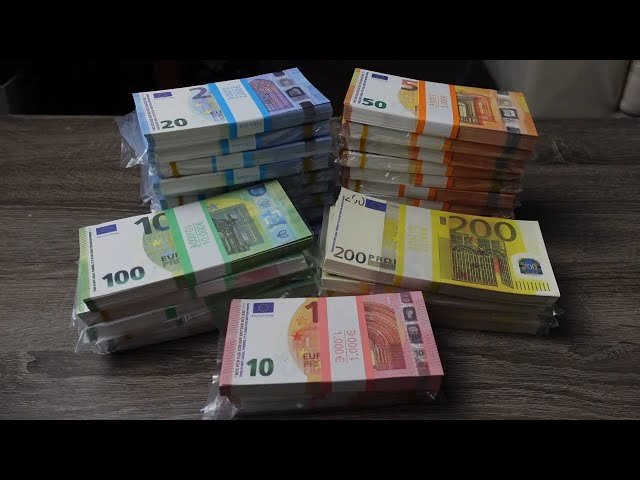
Is Prop Money Legal in the EU? A Complete Guide for Filmmakers
If you’re producing a film, TV scene, music video, or social content that involves cash, you’ve probably typed “is prop money legal” into a search bar at some point. The short answer is: yes, but only if it meets specific criteria. This guide breaks down exactly what those criteria are, why they exist, and how to make sure your production stays on the right side of EU law.
Every year, thousands of filmmakers, YouTubers, and educators across Europe need realistic-looking cash for a scene — a bank heist, a briefcase handoff, a stack of notes on a table. The temptation is to grab the most convincing-looking bills you can find. But when it comes to euro banknotes specifically, “convincing” and “legal” don’t always mean the same thing, and understanding the difference matters more than most people realise.
Table of Contents
- What Is Prop Money, Exactly?
- Common Uses of Prop Money in Production
- Why the EU Treats Euro Banknotes Differently
- The Legal Framework Behind Euro Banknote Reproductions
- The Criteria for Lawful Euro Banknote Reproductions
- Does the Law Vary by Country?
- Common Myths About Prop Money Legality
- Why This Matters for Filmmakers Specifically
- Real-World Consequences of Non-Compliant Prop Money
- Best Practices When Sourcing Prop Money
- How to Vet a Prop Money Supplier
- Prop Money Needs by Production Type
- Frequently Asked Questions
- Final Thoughts
What Is Prop Money, Exactly?
Prop money is currency-like paper produced specifically for use in film, television, theatre, photography, and online content. It’s designed to look like real money on camera from a normal viewing distance, while being clearly distinguishable from genuine currency up close, in hand, or under scrutiny. Prop money is not intended — and legally cannot be intended — to be used as actual payment.
This distinction is the entire basis of EU law on the subject. It’s not “prop money is banned” or “prop money is fine” — it’s a question of whether a specific reproduction crosses the line into something the general public could mistake for genuine currency.
How Prop Money Differs From Counterfeit Currency
It’s worth being precise about terminology here, because the two are often confused. Counterfeit currency is produced with the intent to deceive and to be used as if it were genuine payment. Prop money is produced with the opposite intent: to look convincing on screen while being unmistakably identifiable as non-currency the moment it’s examined directly. The legal criteria discussed later in this guide exist specifically to enforce that second category and keep it separate from the first.
Common Uses of Prop Money in Production
Before getting into the legal side, it helps to understand just how broad the demand for prop currency actually is. It’s not just big-budget heist films — prop money shows up across almost every corner of visual media:
- Feature films and TV dramas — bank robbery scenes, money laundering plots, briefcase exchanges, casino sequences.
- Music videos — cash-throwing shots, stacks on tables, “making it rain” sequences.
- Social media content — TikTok and YouTube skits, unboxing-style videos, comedic sketches.
- Theatre productions — stage props that need to survive repeated handling across a run of performances.
- Financial literacy training — classroom exercises where handling realistic-looking notes helps teach budgeting or cash handling.
- Photography and advertising — product shoots, editorial spreads, and marketing campaigns involving cash visuals.
Each of these use cases has slightly different practical needs (volume, denomination mix, durability for repeated handling), but all of them sit under the same legal framework described below.
Why the EU Treats Euro Banknotes Differently
Unlike a single national currency, the euro is shared across nineteen countries, which makes protecting its integrity a coordinated, cross-border responsibility. The European Central Bank (ECB) and the national central banks of the eurozone jointly oversee the currency’s design, security features, and legal protections. Because counterfeiting or confusing reproductions of the euro could, in theory, affect trust in the currency across multiple economies at once, the EU treats reproduction rules as a shared, harmonised responsibility rather than leaving it purely to individual national counterfeiting statutes.
This is why the rules governing prop money and reproductions aren’t found in a single country’s criminal code, but in ECB-level decisions that apply consistently across the eurozone, working alongside — not instead of — each country’s own counterfeiting laws.
The Legal Framework Behind Euro Banknote Reproductions
The key piece of legislation is a European Central Bank decision governing the reproduction of euro banknotes, most recently updated to tighten the rules around online sales of realistic-looking bills. This sits alongside a related regulation covering medals and tokens that resemble euro coins, which follows a similar logic for coin-shaped novelty items.
In other words, slapping a tiny “PROP” watermark in the corner of an otherwise near-perfect replica doesn’t automatically clear the legal bar. The design of the note itself has to meet objective criteria, which we’ll walk through next.
A Brief History of the Rules
The original framework dates back to the early 2000s, shortly after the physical euro entered circulation, when the ECB first published rules clarifying the conditions under which reproductions of euro banknotes are allowed and how damaged banknotes may be exchanged. As online marketplaces made it easier to produce and distribute increasingly convincing “novelty” and prop banknotes, the ECB later amended the rules to close loopholes around reproductions that technically carried a disclaimer but were, in practice, difficult to distinguish from genuine notes.
The Criteria for Lawful Euro Banknote Reproductions
Under the ECB’s rules, a reproduction of a euro banknote is considered lawful — meaning there’s no realistic risk the public could mistake it for genuine currency — if it meets a defined set of physical criteria. Below is a simplified summary of the general principles productions and prop suppliers should be aware of:
| Criterion | What It Generally Requires |
|---|---|
| Size | The reproduction must be either clearly smaller (typically no more than 75%) or clearly larger (typically at least 125%) than the corresponding genuine banknote in both length and width. |
| One-sided printing | Reproductions are generally only considered lawful if printed on one side of the paper, not both, unlike genuine banknotes. |
| Wording | Clear, legible wording such as “SPECIMEN” or “PROP MONEY — NOT LEGAL TENDER” printed prominently, not hidden in tiny text. |
| Security features | The reproduction should not replicate genuine security features (holograms, security thread, watermark, colour-shifting ink) in a way that could deceive. |
| Online/digital use | Digital images of banknote reproductions on websites must include technical measures (such as low resolution or a visible diagonal “SPECIMEN” overlay) to prevent convincing print-outs. |
If a reproduction fails these tests — for example, if it’s the exact size of a genuine note, printed on both sides, with a barely visible disclaimer — it risks being classed as an unlawful reproduction, independent of whether the seller calls it “prop money.”
Why Each Criterion Exists
Size Difference
A note that’s visibly larger or smaller than genuine currency is immediately identifiable by touch and sight, even by someone not paying close attention. This single criterion does more work than almost any other rule in preventing accidental confusion.
One-Sided Printing
Genuine euro banknotes are printed on both sides with a specific alignment between front and back design elements. Restricting reproductions to one-sided printing removes an entire layer of visual complexity that would otherwise make a note harder to distinguish at a glance.
Visible Wording
This is the most direct consumer-protection measure — a note that says “SPECIMEN” or “PROP” in a legible, prominent way leaves no ambiguity, even for someone unfamiliar with prop money as a category.
No Functional Security Features
Security features like watermarks, security threads, and colour-shifting ink exist specifically so the public can verify genuine currency. Reproducing them — even imperfectly — undermines the very purpose they serve and is treated seriously under EU rules.
Does the Law Vary by Country?
The ECB framework applies across the eurozone, but enforcement and any additional national rules (for example, under individual countries’ broader counterfeiting statutes) can vary. If you’re producing content or shooting on location in a specific EU country, it’s worth doing a quick check of that country’s national central bank guidance or consulting a local legal advisor, especially for high-budget productions or scenes involving large volumes of cash on screen.
A few practical notes for common filming destinations:
- Germany: The Bundesbank publishes its own guidance on reproduction rules and is a useful reference point for productions filming there.
- France, Italy, Spain: National central banks generally defer to the ECB-level criteria but retain the ability to enforce national counterfeiting law independently if a reproduction is deemed deceptive.
- Non-eurozone EU countries: If you’re producing content in a country that doesn’t use the euro but the scene involves euro props (for example, an international co-production), the same reproduction rules still apply to any euro banknote imagery used.
Common Myths About Prop Money Legality
Myth: “As long as it says PROP somewhere, it’s automatically legal.”
Not necessarily. As covered above, labelling is only one of several criteria. A note that’s genuine size, double-sided, and near-identical in appearance can still be unlawful even with a disclaimer, if that disclaimer isn’t prominent enough to prevent confusion.
Myth: “Prop money is basically the same as counterfeiting.”
No. Counterfeiting requires intent to deceive and use as payment. Prop money produced to meet the lawful reproduction criteria is a completely different legal category, used openly and legitimately across the film and content industry.
Myth: “If a supplier is selling it online, it must be legal.”
Unfortunately not a safe assumption. The ECB has specifically flagged online marketplaces as a common source of non-compliant reproductions. Availability doesn’t equal compliance — it’s worth checking a supplier’s specific product design against the criteria yourself.
Myth: “Only counterfeiters get in trouble — productions are always safe.”
Productions and suppliers can both face scrutiny if a reproduction is found to be unlawful, particularly around cross-border shipping, customs, or if props end up circulating beyond the set.
Why This Matters for Filmmakers Specifically
Productions are usually the last people who want to get tangled up in a currency law issue — but a few practical risks are worth knowing:
- Customs and shipping delays: Reproductions that look too close to genuine currency can be flagged or seized at customs, especially for cross-border shipments.
- On-set incidents: Prop money that’s too convincing can accidentally end up spent, deposited, or mistaken for real cash by crew, extras, or the public if it leaves the set.
- Platform and distribution issues: Some platforms and broadcasters have their own internal policies requiring proof that prop currency used on screen meets legal reproduction standards.
- Reputational risk: Nobody wants a production associated with a counterfeiting investigation, even an unfounded one.
- Insurance considerations: Some production insurance policies specifically ask about prop currency sourcing as part of risk assessment.
Real-World Consequences of Non-Compliant Prop Money
While every situation is different, a few recurring scenarios illustrate why compliance matters in practice rather than just in theory:
- Seized shipments: Customs authorities have broad discretion to hold or seize packages containing currency-like items that don’t clearly meet reproduction standards, which can derail a production timeline right before a shoot date.
- Accidental circulation: Prop bills that are too close to genuine size and printing have, in isolated cases, been mistakenly spent or deposited after leaving a set, creating a headache for whoever’s name is on the transaction.
- Retailer and platform takedowns: Marketplaces and payment processors sometimes remove prop money listings that don’t clearly meet compliance criteria, which can affect a supplier’s ability to fulfil an order on time.
Best Practices When Sourcing Prop Money
- Buy from a supplier who understands the legal criteria, not just one who advertises “ultra-realistic” bills without explaining compliance.
- Check the note size and printing — genuine one-to-one scale, double-sided reproductions are the highest-risk category.
- Keep it on set — establish a clear chain of custody for prop cash so it doesn’t circulate after the shoot.
- Brief your cast and crew that the notes are props, particularly with extras who may not be used to handling prop currency.
- Keep documentation — an invoice or supplier compliance statement can be useful if a question ever comes up during shipping or on location.
- Order early — allow time for shipping, especially for international productions, in case of any customs review.
- Match the denomination mix to the scene — over-ordering large denominations you don’t need adds unnecessary risk and cost.
How to Vet a Prop Money Supplier
Not all prop money suppliers operate with the same level of care. Here’s a short checklist for evaluating one before placing a bulk order:
- Do they clearly explain how their notes differ in size from genuine currency?
- Do they confirm one-sided printing, or is this unclear from the product description?
- Is the “SPECIMEN” or “PROP” wording visible in product photos, not just mentioned in the description?
- Do they have a published legal disclaimer page explaining intended use?
- Can they answer direct questions about compliance without vague or evasive responses?
- Do they offer clear shipping and customs information for international orders?
Prop Money Needs by Production Type
Feature Films and TV
Typically need larger volumes across multiple denominations, sometimes including “stacks” or “bricks” for scenes involving large sums. Screen time and camera distance matter — close-up shots may require higher print quality than wide shots.
Music Videos
Often need cash that can withstand handling and throwing (“making it rain” shots), so durability of the paper stock is a practical consideration alongside legal compliance.
Social Media Content
Usually smaller quantities, but creators should still confirm their supplier’s notes meet reproduction criteria, since platform policies increasingly scrutinise currency-like content.
Theatre
Notes need to survive repeated handling across a run of performances, so paper durability and print quality for repeated close-range audience viewing are both relevant.
Training and Education
Financial literacy programmes benefit from notes that feel realistic enough for hands-on exercises while remaining unmistakably distinguishable from genuine currency for classroom safety.
If you’re sourcing bills for an upcoming shoot, you can browse prop euros designed with production use in mind, or head to the prop money euro homepage to see the full range of denominations and formats available.
Need Prop Money for Your Next Shoot?
Get in touch with our team for bulk orders, custom denominations, or fast turnaround for production deadlines.
Email sales@propmoneyeuro.eu Browse Prop EurosFrequently Asked Questions
Is it illegal to own prop money in the EU?
No. Owning correctly manufactured prop money — reproductions that meet the size, printing, and labelling criteria described above — is not illegal. The legal risk arises with reproductions designed to be mistaken for genuine currency, or with attempting to use prop money as real payment, which is a separate criminal matter entirely.
Can I use prop money in a music video or TikTok?
Yes, prop money is widely used in music videos and social content, as long as the notes meet the lawful reproduction criteria. Many creators specifically look for prop bills designed to read clearly as “prop” on close inspection while still looking convincing on camera from a normal viewing distance.
What happens if prop money gets mixed up with real cash?
This is exactly what the legal criteria are designed to prevent. Properly produced prop money has size differences, one-sided printing, and visible wording that make it straightforward to distinguish from genuine notes when handled directly, even if it reads as convincing on screen.
Do I need permission from a bank or government body to use prop money?
Generally no, provided the reproduction already meets the lawful criteria. If a supplier or producer has doubts about a specific design, it’s possible to seek written confirmation from the relevant national central bank or the European Central Bank.
Is prop money the same across all EU countries?
The underlying framework for euro banknote reproductions applies across the eurozone, since it’s a shared currency, but always check whether your specific filming location has additional local requirements, particularly for larger productions.
How can I tell if a supplier’s prop money is compliant?
Ask directly. A supplier who’s confident in their product should be able to explain the size ratio, printing method, and labelling used on their notes. Vague answers or refusal to discuss the specifics are a red flag.
Can prop money be used for photography and advertising, not just film?
Yes. The same reproduction rules apply regardless of the final medium — photography, print advertising, and digital campaigns all fall under the same criteria as film and video use.
What’s the difference between prop money and “movie money” sold as collectibles?
Functionally, these terms are often used interchangeably. What matters legally isn’t the marketing name but whether the specific product meets the reproduction criteria around size, printing, and labelling.
Can I ship prop money internationally without issues?
Generally yes, but reproductions that are closer in size and appearance to genuine currency face a higher chance of customs review. Choosing a supplier that builds compliance into the product design from the start reduces this risk.
Do documentary productions have different rules for using real footage of cash?
This guide covers physical prop money reproductions rather than footage of genuine currency. Using real banknote imagery in a documentary is a separate consideration, generally covered by different rules around depicting currency in media.
Is there an age restriction on buying prop money?
Prop money itself typically isn’t age-restricted the way some other prop or novelty items are, but individual suppliers may set their own purchasing policies.
What should I do if customs flags a prop money shipment?
Keep your invoice and any supplier documentation on hand, as this can help demonstrate the product’s intended use and compliance with reproduction criteria during a review.
Can prop money be customised with specific denominations for a scene?
Many suppliers offer denomination-specific bundles or stacks, which is useful for productions needing a specific visual (for example, an all-€50 stack for a particular shot).
Is prop money reusable across multiple productions?
Yes, as long as it’s stored and handled properly between shoots. Many production and props departments keep prop currency as part of their reusable inventory.
Final Thoughts
Prop money is a completely normal, legal part of film and content production across Europe — but “legal” depends on the specific design of the notes, not just what they’re called. Understanding the criteria above puts you in a much stronger position, whether you’re a solo creator ordering a small bundle or a production house sourcing bulk quantities for a feature film.